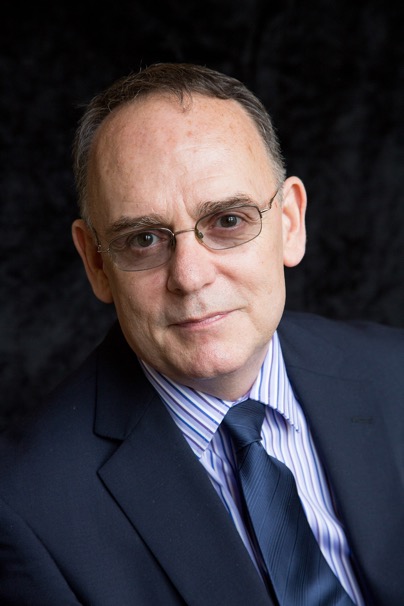
Dr Richard Taylor is an Expert in the identification, verification and valuation of diamonds, gemstones, jewellery, watches, silver and antiques. He tells us how got into Expert Witness work, what he loves about it, and why he likens being cross-examined to playing chess.
No one sets out to have a career as an Expert Witness.
It’s an opportunity that arises when you’re an expert in your field. I joined the jewellery industry almost by accident over 40 years ago and went on to get a PhD in mineral physics.
I love gemstones: nature seems to get everything right with them. [Leading diamond company] De Beers got involved with my PhD research, which led me to specialise in diamonds.
My first Expert Witness case came about 30 years ago.
There weren’t many jewellery Expert Witnesses back then. A solicitor phoned me up one day looking for someone in the industry who could assist with a case at the Crown Court about the authenticity of a pearl necklace. It was pretty technical and I thought, “I can help with that.” So, I did.
 The range of cases I get involved in never ceases to amaze me.
Valuation is always at the heart of it – whether it’s a criminal case, family law, insurance, or probate. I probably get asked the most about diamonds, because they are so valuable.
With criminal cases, the police are obliged to start putting values on stolen property as soon as a crime takes place. That’s because sentencing depends on how much was stolen or embezzled.
When a case is about the proceeds of crime, the state needs to ensure that any improperly gained assets or money are clawed back. Value becomes a significant part of that process. Generating a value for items that are not available to examine is an aspect of the work that relies on what alternative evidence is available. That could be a verbal description, photographs, receipts or other documents. The better the documentation, the higher the precision.
I've never had a case where I've duplicated previous work.
There’s always something completely different hidden in the detail and the structure. Every case is a discovery in itself.
Giving evidence in court can be a fun experience.
I work on around 50-60 cases each year, two or three of which generally end up going to court. Being cross-examined is a bit like playing chess: you need to be able to see two or three moves ahead.
Being in a cross-examination with an astute and well-prepared barrister, you've got to be aware of the way they’re trying to form questions to get the answers that they want – rather than what are the most appropriate answers.
Make sure you understand the case as a whole and know your evidence inside out.
If you go into court and you've written an Expert Report you don't know intimately, you’re going to end up in trouble because barristers will look for any weakness at all.
Sometimes it can be two years between writing a report and going to court!
You have to spend time studying and re-learning your report. If your Expert opinion has changed, you need to be prepared to acknowledge that and explain why you have a different view now. Circumstances may be different, or practices and even laws might have changed.
As an Expert Witness, you have to give full and justified answers.
You've also got to give a balanced and totally independent, uninfluenced opinion. I once had a barrister who demanded I give only one-word answers — essentially yes or no — which I was unable to do. You need to make sure that the answers you provide are always fully understandable by the court — both the answer and the context of the answer.
When writing an Expert Report, I define everything and avoid jargon.
You've got to put it across in a way that's going to be understood. That's a really important aspect, especially in a jury trial. The jury, judge, barristers and solicitors all need to understand the context and meaning of what you're saying.
Litigation is a very expensive process.
I’ve noticed changes in the way I’m instructed over the years because of this. Solicitors will often write my instructions in a way that limits the number of things I look at, which can be really dangerous because significant issues could get overlooked. I always make sure my instructing party understands the implications of me not looking at relevant documents or issues.
Expert Witnesses have become a bigger part of the judicial system since I started out.
Most Experts now realise that we have to be very careful about how far our expertise goes. Each time I'm instructed, I ask myself whether I’m staying within the bounds of my expertise.
I love being an Expert Witness because it makes you think outside the box.
I go through a learning process with every case I do and I'm always more knowledgeable at the end than I was at the beginning. It's a challenge: like doing a PhD over and over again! And, in a very similar way to writing a thesis, you feel like you've achieved something.
The process of questioning yourself and being critical of what you're doing and why is also a really worthwhile exercise.
To be a good Expert Witness, you have to doubt yourself.
Part of being a good Expert Witness is staying grounded and acknowledging that you might not be the expert in everything. I have expertise, knowledge and experience, but I'm learning at the same time.
My advice is to approach Expert Witness work with humility and a certain degree of trepidation, but also with the knowledge that you're going to learn from it. You’ll enjoy the process if you do it well and you do it properly.
Learn the law – but remember you’re not a lawyer.
It’s important to understand the system and the mechanism you're working within. But remind yourself that you’re not an expert in the law. Your role is not to be an advocate – it’s to be independent.
My typical day…
I have between six and eight cases that are active at any one time and around fifteen that might be going ahead. I often start the day with a plan to work on something, and that plan completely goes out of the window when new information on a case comes in. My biggest weakness is seeing a case and going down a rabbit hole for two hours looking at the implications of it when I haven't even been instructed on it!
To be an Expert Witness, you need never-ending joy from your subject.
You need a fundamental interest in your subject, knowing that there's always more to discover and more to learn.